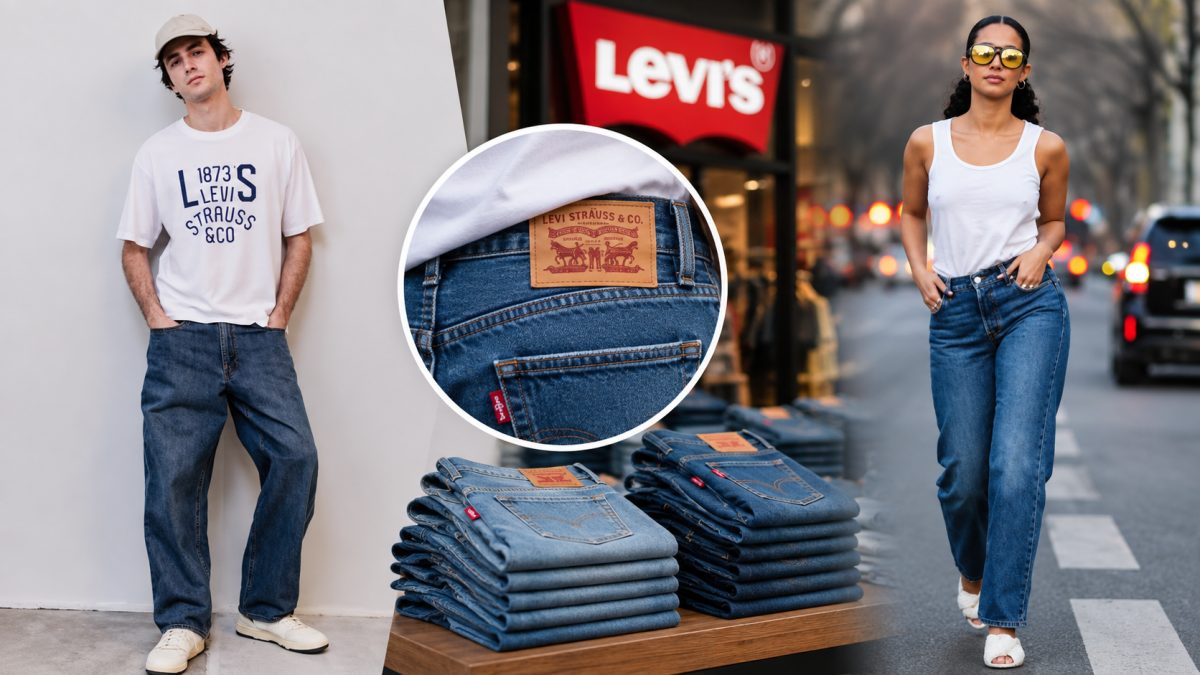

A fashion cycle that once sidelined Levi's signature styles has reversed course, fueling revenue gains, raised forecasts and a newly confident growth strategy.
Levi Strauss & Co., the 173-year-old denim maker, is benefiting from a resurgence of 1990s-inspired fashion, according to an Oct. 4, 2026, report from The Wall Street Journal. Low-rise, loose and baggy jeans — silhouettes central to 1990s style — are driving renewed demand for the brand, reversing years of softer sales that followed consumers' shift toward newer, slimmer cuts.
Why a Yale-Linked Macro Trader Says Never Short a Stock Just Because It Looks Expensive
How a Decades-Old Decline Turned Into a Comeback
The Journal's report, written by Kelly Cloonan, frames the shift as a case of timing meeting heritage. Levi's jeans were, in the Journal's words, "one of the 1990s core staples," but sales sagged as shoppers moved toward contemporary silhouettes and the company struggled to adapt. That struggle has now given way to opportunity: as skinny jeans have lost dominance across the broader denim market, shoppers have gravitated toward roomier legs, lower rises and more relaxed proportions — exactly the archive Levi's has spent decades building.
Rather than treating the trend as pure nostalgia, Levi Strauss has repositioned a cluster of products to meet it. The company has spotlighted the 501 '90s for women, 501 Loose for men, Cinch Baggy, Wide Leg and Low Loose styles for women, alongside Relaxed and Boot Cut options for men. These additions sit beside, rather than replace, the brand's existing straight, slim, skinny and boot-cut lines, allowing Levi Strauss to participate in the current cycle without dismantling its established business.
Catholic Dioceses Bring $250 Billion in Assets to a Manhattan Summit Over Faith-Aligned Investing
The Numbers Behind the Narrative
Levi Strauss's fiscal second-quarter 2026 results, reported July 8, 2026, show the trend translating into measurable financial performance. The company posted $1.56 billion in net revenue, an 8% increase on a reported basis and 6% organic growth, according to its official earnings release. Adjusted earnings reached 28 cents per share, topping the 24-cent consensus estimate, while gross margin expanded 10 basis points to 62.7%. Adjusted EBIT margin rose to 9%, up 70 basis points year over year.
The company's bottoms business — its core jeans category — grew 6%, with Levi Strauss stating that established fits provided the foundation while newer styles added incremental momentum. Women's revenue rose 11%, tops increased 5% and shorts grew 11%, according to financial coverage of the results. White-denim sales surged 70%, a seasonal detail reflecting consumer appetite for loose, wide-leg and relaxed cuts in lighter colors. Products outside denim bottoms accounted for roughly one-third of total revenue growth, indicating the company's gains are not confined to a single category.
Executive Commentary and Direct-to-Consumer Strength
On the company's second-quarter earnings call, Chief Executive Michelle Gass said, "We delivered solid top-line performance this quarter, with organic net revenues up 6%." She added that "looser silhouettes continued to deliver solid growth," naming the 501 '90s for Her and 501 Loose for Him as "key standouts" and describing them as proof of the "longevity and relevance" of the brand's core icons.
Direct-to-consumer channels represented 51% of quarterly revenue and grew 8%, while comparable sales at company-operated stores rose 6% — the 17th consecutive quarter of such growth, according to financial reporting on the results. That streak suggests the momentum extends into Levi's own retail and digital operations rather than resting solely on wholesale partnerships, a distinction that matters for a company managing both brand control and profitability.
Raised Forecasts Meet Investor Caution
The second-quarter results followed an already strong first quarter, when Levi Strauss reported revenue up 14% on a reported basis and 9% organically, prompting the company to raise its full-year outlook for net revenue, margins and earnings. In the second quarter, Levi Strauss raised its full-year organic revenue-growth forecast again, to between 5.5% and 6%, up from 4.5% to 5.5%, and lifted its adjusted earnings forecast to a range of $1.46 to $1.52 per share. The company also increased its quarterly dividend, according to its official second-quarter earnings release.
Despite exceeding Wall Street's revenue and earnings expectations, Levi Strauss shares fell in after-hours trading following the report, as investors weighed the company's outlook for the remainder of the year, according to earnings-call coverage. BofA, meanwhile, raised its fiscal 2026 earnings estimate to $1.52 per share from $1.48, reflecting analyst confidence even as some investors remained cautious about the pace of growth. The company also continues to navigate tariff pressures and foreign-exchange headwinds, factors it says have not prevented margin expansion this year.
Balancing Trend-Driven Growth With Long-Term Stability
Levi Strauss's strategy centers on treating the 1990s revival as additive rather than foundational. Skinny, slim, straight and boot-cut jeans still account for the majority of its bottoms business, even as looser silhouettes capture the strongest current demand. By expanding its catalog to include both archive-inspired and contemporary fits, the company is positioning itself to benefit from today's fashion cycle while retaining flexibility if consumer preferences shift again.
The verified financial results confirm that the 1990s-inspired revival is contributing directly to Levi's recent performance, from revenue growth to raised guidance to a 17-quarter streak of comparable-sales gains. What remains unresolved, as reflected in investors' mixed reaction to otherwise strong results, is whether this momentum represents a durable repositioning of the brand or a fashion moment that could fade once nostalgia-driven demand runs its course.