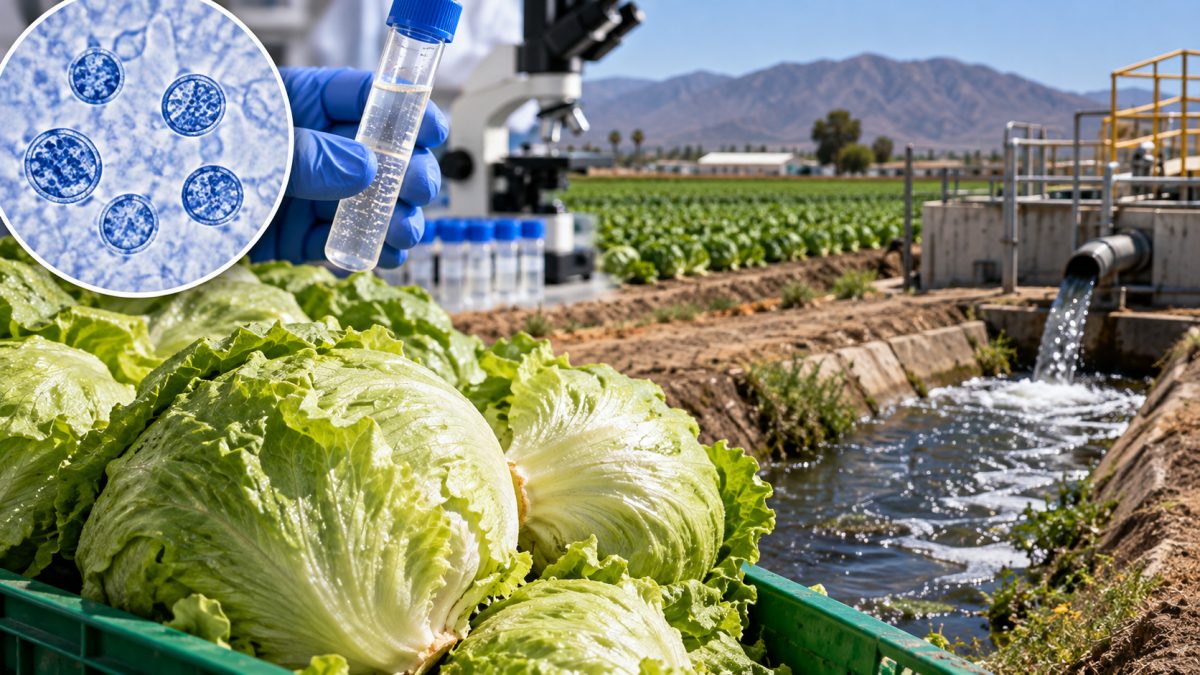

The FDA closed its investigation into the largest U.S. cyclosporiasis outbreak on record after finding the parasite in processing-plant wastewater and farm drainage sediment in Mexico, though the exact contamination route remains unknown.
The U.S. Food and Drug Administration announced Friday, October 2, 2026, that environmental testing at a Taylor Farms de Mexico processing facility and a supplying iceberg-lettuce farm in central Mexico had turned up two positive samples of Cyclospora cayetanensis, the parasite behind an outbreak that sickened nearly 13,000 people across the United States. The agency said the findings strengthen, but do not conclusively prove, the link between the recalled shredded lettuce and the nationwide illness cluster, closing out months of inspections, sampling and supply-chain tracing conducted in coordination with Mexican officials.
HealthPartners and Essentia Health Plan Merger Creating Minnesota's Newest Health Care Giant
What Investigators Found at the Mexican Sites
View this post on Instagram
FDA inspectors collected environmental samples during onsite visits to Taylor Farms de Mexico's processing plant and several iceberg-lettuce growers identified through the agency's traceback investigation. One positive sample came from a tank holding outgoing wastewater at the processing facility in Guanajuato; the second was pulled from sediment in a drainage ditch at a farm that supplied lettuce to the company, according to the FDA and reporting by The New York Times.
The agency was careful to frame the results as supportive rather than definitive. "While there is currently not enough evidence to conclusively determine how contamination occurred in this outbreak, the positive samples show that Cyclospora was present in the environment where lettuce was grown and processed," the FDA stated in its written update. Officials said the findings add to "the strong epidemiological data and traceback convergence" already pointing to Taylor Farms de Mexico's shredded iceberg lettuce as the outbreak source.
Trapped Civilians in Russian-Occupied Oleshky Boil Weeds for Food as Bodies Are Left for Dogs
From Taco Bell Complaints to a Multistate Recall
The outbreak first came into focus when the CDC's investigation zeroed in on Taco Bell locations where numerous ill people reported eating before falling sick. FDA traceback work subsequently identified Taylor Farms de Mexico as the common supplier of shredded lettuce used at those restaurants, triggering a broader supply-chain review that extended well beyond a single fast-food chain.
Taylor Farms de Mexico launched a voluntary recall on July 17, 2026, pulling all iceberg lettuce sourced from central Mexico off the U.S. market due to potential Cyclospora contamination, according to the FDA's recall notice issued the following day. The New York Times reported the recall eventually covered 236,192 cases of lettuce distributed to retailers, restaurants and food-service distributors, with downstream customers including Walmart, Jack in the Box, Taco Bell and Sysco. The scale of that distribution network explains why illnesses surfaced across multiple states and why regulators treated the episode as a major multistate food-safety event.
A Five-Month Timeline of Inspections and Conflicting Results
The FDA's chronology shows a methodical, monthslong process. After the July 17 recall and July 18 public health alert, the agency began onsite inspections and sample collection at Mexican lettuce growers on August 20, examining the Taylor Farms processing plant and surrounding farms with cooperation from Mexican authorities. The FDA also published a formal recall classification on August 28, tying the action directly to the multistate outbreak.
Notably, Mexico's own food-safety authority reported in August that its investigation had not detected Cyclospora in lettuce or water at the facility — a finding that stood in contrast to the FDA's later environmental results. The CDC declared the outbreak itself over on September 11, 2026, even as the FDA continued its source investigation. The FDA's final announcement came October 2, when it reported the two positive samples and formally declared its probe complete, having concluded that onsite inspections and sample collection in Mexico had ended.
Why the Case Remains Scientifically Unresolved
Despite closing the investigation, the FDA left significant questions unanswered. The agency did not report that the Mexican environmental samples had been genetically matched to Cyclospora recovered from U.S. patients, and it indicated it was continuing efforts to determine whether the genotypes corresponded, according to The New York Times. Without that genetic link, investigators cannot say with certainty whether the contaminated wastewater or drainage sediment actually touched the recalled lettuce or merely existed nearby in the same agricultural environment.
The discrepancy between Mexican regulators' negative findings and the FDA's later positive samples also highlights the limits of environmental testing, since contamination can be intermittent or unevenly distributed enough to evade earlier sampling efforts. The FDA acknowledged it still cannot determine whether contamination occurred in the field, during harvest, in transit, during processing, or through some combination of those stages.
What Happens Next for Regulators and the Produce Industry
Health officials expressed confidence that lettuce tied to the outbreak is no longer on the market, effectively closing the consumer-protection phase of the response. The FDA has shifted its attention toward post-outbreak documentation and prevention-focused work, including evaluating wastewater management, agricultural drainage practices and environmental monitoring protocols at facilities supplying the U.S. leafy-greens market.
For an industry that moves vast quantities of processed lettuce from Mexican farms through American restaurants and grocery chains, the episode reinforces scrutiny on traceability systems and cross-border food-safety coordination. With nearly 13,000 confirmed illnesses, the outbreak stands as the largest reported cyclosporiasis event in U.S. history, and the unresolved contamination pathway leaves regulators and growers alike facing pressure to tighten oversight before the next growing season begins.