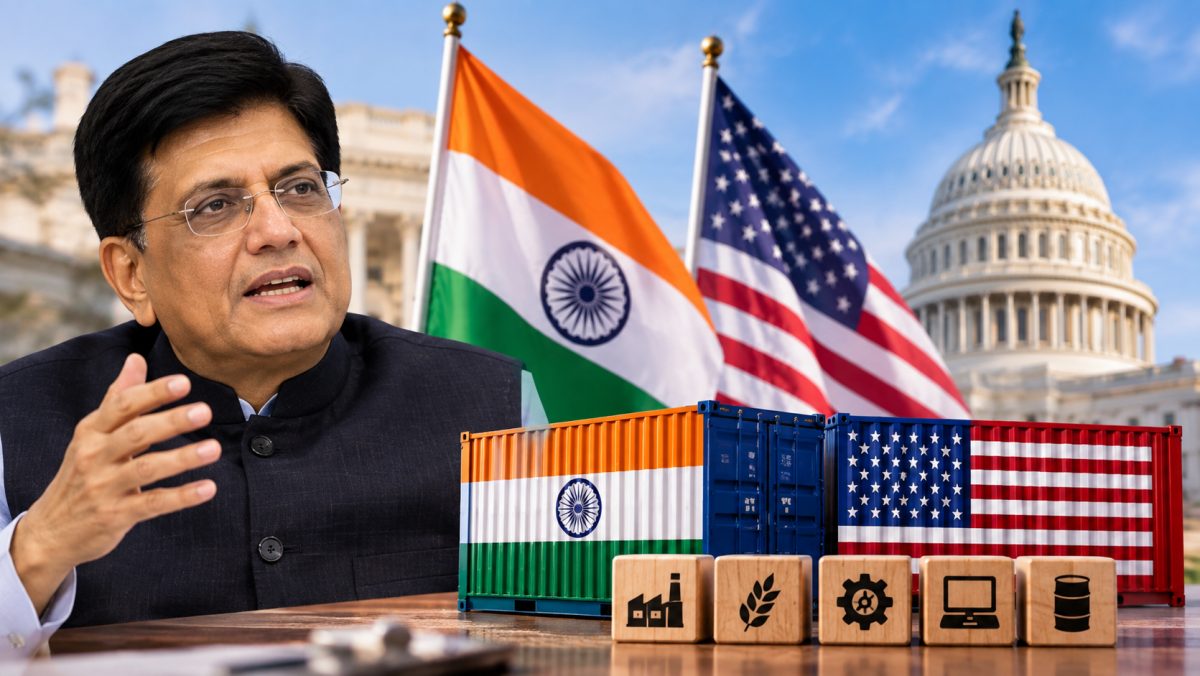

Commerce Minister Piyush Goyal's week-long US trip combines G20 diplomacy with high-stakes bilateral talks that could determine whether months of optimistic rhetoric translate into a signed interim trade agreement.
India's Commerce and Industry Minister Piyush Goyal will travel to the United States from September 29 to October 5, 2026, for talks aimed at advancing and potentially finalising an interim India-US trade agreement, New Delhi's Commerce Ministry announced on September 28. The visit will take Goyal to Milwaukee, Wisconsin, for the G20 Trade Ministers' meeting, following an invitation from US Trade Representative Jamieson Greer, and will include a separate bilateral engagement between the two men focused on the unresolved elements of the broader Bilateral Trade Agreement, according to Reuters and PTI reports.
FPI Selloff Headlines Hide a Sharper Truth: Foreign Investors Are Picking, Not Fleeing India
A Visit Months in the Making
View this post on Instagram
The trip is the culmination of a negotiating process that has stretched across much of 2026, anchored by a joint statement issued by Prime Minister Narendra Modi and President Donald Trump on February 7, 2026. That statement committed both governments to work toward a comprehensive Bilateral Trade Agreement while pursuing an interim deal as a first step. Since then, Indian officials have offered a steady stream of upbeat assessments without confirming a signing date or disclosing specific terms.
On September 4, Goyal said negotiations on the India-US free-trade agreement had been "concluded," with both sides fine-tuning the first tranche of the BTA, according to India Today. He reiterated that India "does not negotiate according to externally imposed deadlines," a position he has repeated in subsequent public remarks. Commerce Secretary Rajesh Agarwal added on September 9 that the pact was "more or less finalised," with only a few issues remaining before signing at an "appropriate time," per PTI.
India Mandates Aadhaar Authentication for Subsidised LPG Refills From October 1
From 'Fast and Good Direction' to 'Done and Dusted'
Goyal's public language has grown progressively more emphatic in recent weeks. On September 22, he described the talks as moving "fast" and in a "good direction," according to Moneycontrol and Mid-Day, without identifying which issues remained unresolved. Two days later, on September 24, he went further, telling reporters the proposed pact was "done and dusted," but cautioned that execution hinged on Washington granting India the "right competitive advantage" over rival exporters in the American market, as reported by the Economic Times and Fortune India.
That phrasing marks a subtle but important shift in the negotiation's framing. Rather than suggesting outstanding disagreement over the existence of a deal, Goyal's comments imply the core political agreement is largely settled while the commercial substance — specifically, tariff treatment relative to competing exporting nations — remains the sticking point. A US State Department official was cited by ANI describing the deal as roughly "90% complete," a characterization that aligns with India's own optimistic but incomplete framing.
What the Interim Deal Would Actually Cover
Central to the current phase is the distinction between a comprehensive free-trade agreement and a narrower "interim" arrangement covering the first tranche of the broader BTA. Indian government statements have not disclosed which sectors or product categories the interim package would include, nor has New Delhi released proposed tariff schedules. The approach would allow exporters in priority sectors to gain early benefits while more complex or politically sensitive issues are negotiated separately.
Goyal's remarks on September 3, reported by The Hindu, tied the announcement of BTA details directly to Washington offering preferential terms compared with India's competitors — a recurring theme suggesting New Delhi is not seeking a purely symbolic tariff reduction but a structural advantage in the US market relative to other supplying nations. For Indian exporters, that competitive positioning, rather than the mere existence of an agreement, is described as the decisive commercial variable.
Geopolitical Undercurrents and the Russian Oil Question
The negotiations are unfolding against a backdrop of broader friction, most notably Washington's concerns over India's continued purchases of Russian oil. Moneycontrol reported that Goyal's September 22 comments came even as New Delhi faced "fresh pressure" from Washington on this issue. Indian officials have not publicly confirmed that oil purchases are formally linked to the trade talks, though multiple reports have identified the issue as a source of surrounding pressure on the negotiations.
This geopolitical layer complicates an already intricate commercial negotiation, since any resolution will need to balance India's energy security calculations against its trade ambitions in the US market. The absence of an official link does not eliminate the issue's practical influence on the tone and pace of discussions between Goyal and Greer.
What Comes Next in Milwaukee and Beyond
The immediate milestones are clear: Goyal's attendance at the G20 Trade Ministers' meeting in Milwaukee, his bilateral session with Greer, and any resulting announcement on the interim package's terms. Indian officials have consistently framed the objective as securing an agreement that is "commercially meaningful" rather than one concluded merely to meet an external timeline, a position Goyal has reiterated since early September.
Despite the string of assurances — "concluded," "more or less finalised," "done and dusted" — no official text, tariff schedule, or signing date has been published by either government. These characterizations remain political and administrative assessments rather than confirmation that a binding agreement has been signed or entered into force. Whether the Milwaukee meetings convert months of positive rhetoric into an executable interim deal, or whether talks extend beyond the visit, will depend on whether Washington offers the competitive terms Goyal has repeatedly demanded.