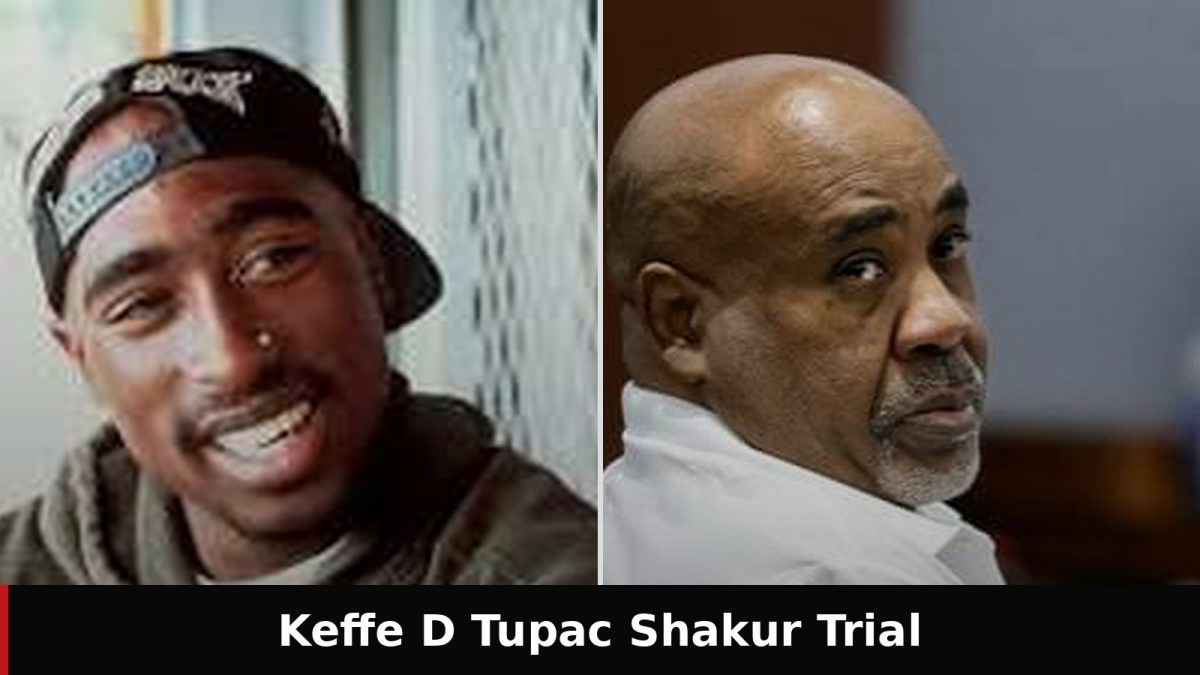

A previously secret 2008 police interview played in a Las Vegas courtroom has jurors hearing, in Duane 'Keffe D' Davis's own voice, that his nephew pulled the trigger in the killing of Tupac Shakur.
Jurors in Las Vegas heard prosecutors play a 2008 recorded police interview on Thursday in which Duane 'Keffe D' Davis, the only person ever charged in Tupac Shakur's 1996 killing, told detectives that his nephew, Orlando 'Baby Lane' Anderson, fired the shots that killed the rapper. The recording, along with a rolling transcript displayed on a courtroom screen, forms a central piece of the state's case against Davis, who is on trial for murder with a deadly weapon nearly 30 years after Shakur's death. Prosecutors do not allege Davis fired the fatal shots himself; instead, they say he planned and coordinated the drive-by shooting as an act of gang retaliation.
In the recording, Davis told detectives he was riding in the front passenger seat of a white Cadillac alongside Anderson and other members of the South Side Compton Crips when the car pulled alongside a vehicle carrying Shakur and Death Row Records founder Marion 'Suge' Knight at a Las Vegas intersection. According to Davis's account, he had a gun in the front seat that he passed to the back, first offering it to Deandre 'Big Dre' Smith, who did not want it, before Anderson took the weapon and opened fire from the back seat.
Prosecutors Build Case Around Davis's Own Words
Chief Deputy District Attorney Binu Palal has cast Davis as the 'shot caller' and on-site commander of a plot to avenge the beating of his nephew, Anderson, by Shakur and members of his entourage in the lobby of the MGM Grand casino hours before the shooting, following a Mike Tyson fight on September 7, 1996. Prosecutors say that beating gave Davis and his associates what he later described as the 'ultimate green light' to retaliate.
Much of the prosecution's case rests not on new physical evidence but on years of statements Davis made publicly after the killing. Those include his 2019 memoir, 'Compton Street Legend,' in which he wrote about supplying the gun that was passed into the back seat, and television interviews such as BET's 'Death Row Chronicles,' in which he said the shots came from the back of his vehicle. Prosecutors opened the trial by showing jurors a compilation of Davis's own media appearances, arguing that jurors would learn the truth about the killing 'from Duane Davis himself.'
Defense Tells Jurors to Reject Davis's Own Account
Davis's attorney, Michael Sanft, has pursued an unusual defense strategy centered on discrediting his own client's statements. During opening remarks, Sanft displayed a slide reading simply 'BULLSHIT' and asked jurors what independent facts support anything Davis said in his interviews or wrote in his book. Sanft has argued that Davis exaggerated or fabricated details for attention, profit and street credibility, and that prosecutors have no corroborating evidence beyond Davis's own self-described embellishments.
The defense's approach directly targets the 2008 interview and the memoir now before jurors, framing them as unreliable self-promotion rather than genuine confession. Sanft has pressed jurors to question whether either side, prosecutors or Davis himself, has solid evidence supporting the narrative laid out across years of interviews and publications.
Witness Testimony and Physical Evidence Fill Out the Trial Record
The trial has also featured emotional and combative testimony from figures connected to Death Row Records. James McDonald, a former associate linked to Mob Piru and Death Row security, testified under subpoena and told lawyers to treat him as a 'hostile witness,' expressing anger at being compelled to revisit the killing. McDonald said he was at Suge Knight's nightclub, Club 662, the night of the shooting rather than in the car with Shakur.
Jurors have also seen surveillance footage from the MGM Grand showing the earlier fight involving Anderson, reviewed bullet casings recovered from the Flamingo Road scene, and viewed autopsy photographs presented by a forensic pathologist detailing Shakur's fatal wounds, prompting some family members to leave the courtroom. Suge Knight, who was driving the BMW carrying Shakur during the shooting and survived, is currently serving a 28-year sentence in California on an unrelated case and has said he would not testify.
A Case Nearly Three Decades in the Making
Anderson, whom Davis identified as the triggerman, was never charged in the case and died in a separate gang-related shooting in Compton in 1998. Davis, now in his early 60s, was indicted in 2023 after years of public statements revived investigative interest in the long-unsolved case, and he has pleaded not guilty. The trial, which began in August 2026, is expected to continue with additional testimony from law enforcement and figures connected to Death Row Records, with the case likely to turn on how jurors weigh Davis's own recorded words against his defense team's insistence that those words cannot be trusted.