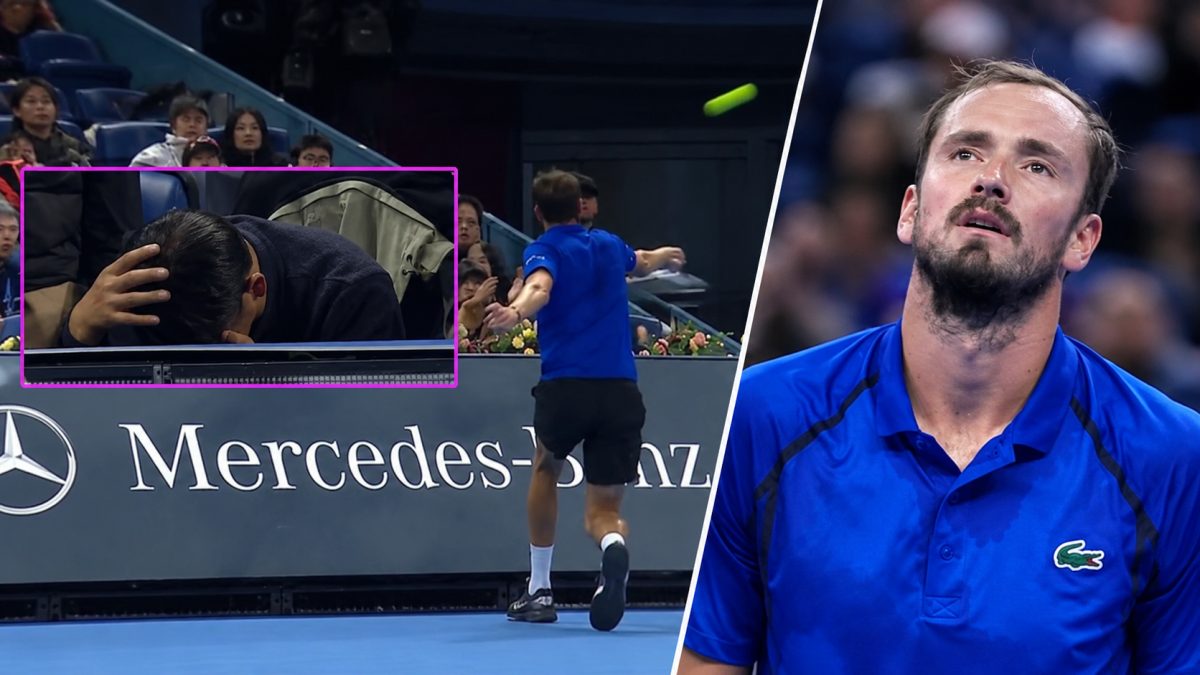

A reflexive backhand swipe at a rebounding ball turned a tense semifinal into tennis history, as officials invoked rarely used disqualification powers mid-match.
Daniil Medvedev was disqualified from his China Open semifinal against Novak Djokovic in Beijing on Monday, October 5, 2026, after a ball he struck flew into the stands and hit a spectator in the face. The incident occurred late in the second set with Djokovic leading 7-5, 5-3 and serving at 15-15, prompting the chair umpire to default Medvedev on the spot and send Djokovic through to the final.
LeBron James's Helicopter Commute From Philly to NYC Sparks Debate Over Safety and Privilege
How a Rebounding Ball Ended the Match in Seconds
View this post on Instagram
The sequence began after Djokovic hit a winner beyond Medvedev's reach, with the ball rebounding off the back wall or an advertising board, according to accounts from the ATP Tour and BBC Sport. Medvedev, reacting in apparent frustration, swiped at the loose ball with his backhand rather than letting it drop, sending it upward and into the front row of spectators behind the baseline. The ball struck a fan around the left-eye area, according to Sky Sports' reporting on the incident.
The chair umpire halted play immediately and consulted with tournament officials before ruling that Medvedev's conduct warranted an instant default rather than a standard code violation. The ATP described the sequence as Medvedev hitting the ball into the crowd after it bounced off the back wall, a characterization consistent across multiple outlets covering the match in Beijing. Within moments, a contest that had been building toward a dramatic finish was over, with Djokovic awarded the win without completing the final games.
Ravens Blow Another Fourth-Quarter Lead as Saints' Tyler Shough Stuns Baltimore With Late QB Sneak
Medvedev's Response and the Code of Conduct Behind the Ruling
Medvedev did not dispute the sequence of events and instead emphasized the lack of intent behind the shot. "It was 100 per cent an accident," he said after the match, according to the ATP Tour. He added, "I feel terribly sorry," and told AFP he was "terribly sorry to the spectator, first of all," expressing a wish to apologize to the fan in person.
The default rested on tennis's code-of-conduct provisions governing ball abuse and dangerous conduct. The specific rule cited in reporting states that players must not "hit, kick, or throw a tennis ball violently, dangerously, or in anger while at the tournament site, in the pursuit of point during match (including warm-ups)." Crucially, the rule applies regardless of whether a player intended to injure anyone — the standard rests on the nature and danger of the action itself, not solely on deliberate intent.
BBC Sport reporting clarified that code violations typically fall into categories of ball abuse, physical or verbal abuse, or racquet abuse, and that players are normally permitted up to three violations before a fourth triggers disqualification under standard escalation procedures. Officials, however, retain discretion to impose an immediate default when conduct is judged sufficiently serious. Medvedev's case was treated as an instant default precisely because the ball struck a person in the face rather than simply landing among spectators.
Djokovic's Advance and a Striking Historical Echo
Djokovic's progression to the final extended his imposing record at the China Open to 33-0 through the semifinal stage, according to Sky Sports, marking his seventh appearance in the tournament's championship match. He moved one victory away from his first title of 2026, though the reporting is clear that this figure reflects his unbeaten run at the event rather than a tournament win already secured.
The episode inevitably drew comparisons to Djokovic's own disqualification at the 2020 US Open, where he was defaulted in the fourth round after striking a line judge with a ball hit in frustration. Speaking after Monday's match, Djokovic said he had not clearly seen what happened in Beijing: "I honestly didn't see what happened," he said, adding that he hoped the spectator was not seriously injured. He also extended sympathy toward his opponent, saying he understood the experience of being disqualified in a significant match. No report indicated Djokovic challenged the umpire's ruling.
Financial Stakes and an Unprecedented Tournament Record
Beyond the immediate elimination, Medvedev's disqualification carries financial and ranking consequences. Reports indicated he would forfeit the ranking points and prize money he would otherwise have earned from his semifinal run, though the exact monetary figure was not disclosed in available coverage. Because he was defaulted rather than beaten in a completed match, the tournament's specific rules govern how his points and earnings from the event are ultimately treated.
Statistical provider Opta Ace was cited by Yahoo Sports as noting that Medvedev became the first player defaulted at the China Open since the tournament's founding in 1993, a distinction that underscores how rare Monday's sequence of events was for an event with more than three decades of history. That claim is attributed specifically to Opta Ace rather than an independent tournament statement.
Unresolved Questions as the Final Approaches
Several details remain unconfirmed in the aftermath of the default. Available reporting does not establish the full extent of the spectator's injury, nor does it include an official medical assessment of the person struck. It also does not identify Djokovic's opponent in the China Open final, nor indicate whether Medvedev intends to appeal the disqualification or whether the ATP plans further disciplinary action beyond the default itself.
What is established is the sequence that unfolded in Beijing: a rebounding ball, an instinctive swipe, contact with a spectator's face, and a chair umpire's decision that immediately ended Medvedev's tournament while propelling Djokovic into another China Open final at 7-5, 5-3, 15-15.