
Five Paramount customers ask Justice Elena Kagan for an emergency order freezing the Warner Bros. Discovery deal just one day before its scheduled closing.
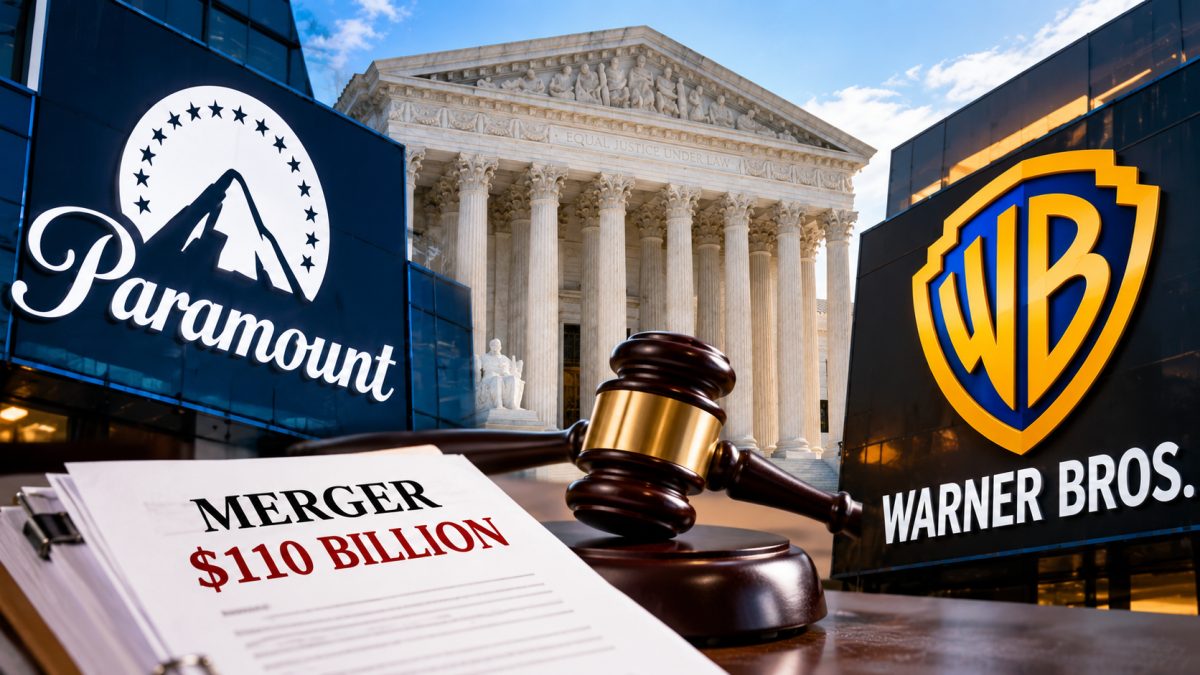
Paramount subscribers filed an emergency application with the U.S. Supreme Court on Monday, October 5, seeking to block Paramount Skydance from completing its acquisition of Warner Bros. Discovery before the transaction's scheduled closing on October 6. The filing asks Justice Elena Kagan, who oversees emergency applications from the relevant federal circuit, to keep the companies as separate entities while the Court weighs the subscribers' broader antitrust challenge.
Warner Bros. Film Chiefs De Luca and Abdy Reportedly Pushed Out Ahead of Paramount Merger Close
Who Is Behind the Emergency Filing
The applicants — Pamela Faust, Len Marazzo, Lisa McCarthy, Deborah Rubinsohn and Gary Talewsky — are represented by attorney Joseph M. Alioto. They are Paramount customers and viewers who argue the merger would unlawfully reduce competition across streaming, television news, film distribution and movie theaters. Their petition marks what reporting describes as the latest, and likely final, attempt to halt the transaction before it closes.
Notably, the requested relief is narrow and temporary rather than a demand for an immediate ruling on the merger's overall legality. The subscribers' brief characterizes the proposed order as one that would "preserve separate ownership and prohibit integration pending disposition of the petition or further order," explicitly stating it would not decide "final antitrust liability." The applicants contend that allowing the deal to close now would reshape the competitive landscape before courts can fully examine their claims, potentially rendering any later relief meaningless.
Paramount's Streaming Chief Exits Days Before Warner Bros. Discovery Merger Closes
A Losing Streak in Lower Courts
The Supreme Court application arrives only after the subscribers' efforts were rejected by a federal district court and subsequently by the U.S. Court of Appeals for the Ninth Circuit. That history presents a steep procedural hurdle: the applicants must convince the nation's highest court to intervene on an emergency basis after losing at two lower levels, and they must do so in the narrow window before the transaction's planned completion.
Public reporting has described the deal's value inconsistently — as approximately $110 billion or $111 billion in some accounts, and as an $81 billion "mega merger" in Associated Press coverage. These figures reflect differing methods of calculation, such as equity value versus enterprise value or how debt is treated, rather than evidence of separate transactions. All describe the same proposed combination between Paramount Skydance and Warner Bros. Discovery.
State Attorneys General and a Tangled Settlement Trail
The merger has faced opposition well beyond the subscriber lawsuit. In July, 12 state attorneys general, including those of California and Arizona, sued to block the transaction under Section 7 of the Clayton Act, which prohibits acquisitions that may "substantially lessen competition." A federal judge in Oakland later granted a temporary restraining order in related litigation brought by California Attorney General Rob Bonta and 11 other states, though subsequent settlement proceedings altered the case's posture.
That state litigation ultimately produced a settlement in September, with the states agreeing to resolve their lawsuit against Paramount Skydance in exchange for new commitments that allowed the transaction to proceed. Paramount has since said it satisfied all regulatory conditions under the merger agreement and secured clearances in nearly 70 countries, characterizing the remaining dispute as an isolated challenge that "stands alone" against what it called a global regulatory consensus.
The settlement did not end every legal controversy, however. Iowa Attorney General Brenna Bird and Montana Attorney General Austin Knudsen separately challenged the 12-state enforcement action at the Supreme Court, calling it a politicized effort. In September, the Court ordered the 12 states to respond to Iowa and Montana's bid to file an original action, setting a September 25 deadline. That dispute, distinct from the subscribers' current application, later resolved itself: Iowa and Montana agreed to dismiss their Supreme Court action after a California federal judge approved the settlement resolving the underlying antitrust case, removing one obstacle to closing without eliminating the subscribers' separate fight.
Competing Positions as the Clock Runs Out
The subscribers' central argument is that combining Paramount and Warner Bros. Discovery's major entertainment assets would harm consumers and competing businesses across streaming, news programming and theatrical distribution. Their filing draws on transaction materials, executive statements and consumer verifications to support these claims — allegations advanced in litigation, not judicial findings that the merger violates antitrust law.
Paramount Skydance has taken the opposite stance, pointing to extensive regulatory review, international clearances and the settlement commitments made to resolve the states' objections as evidence the deal should proceed. The company has also moved to protect itself against the costs of delay as the transaction approached its closing date, signaling confidence that the deal would close on schedule despite the pending Supreme Court application.
What Happens Next
The immediate question is whether Justice Kagan, or the full Supreme Court, issues an order before October 6. Success would require the Court to act with unusual speed, overriding both the lower-court rulings against the subscribers and the settlement framework that has already resolved the states' objections. If no emergency order materializes, Paramount Skydance and Warner Bros. Discovery are positioned to complete the transaction and begin integration.
A closing would not necessarily end all related litigation, but it would make structural separation far more difficult and could significantly narrow the remedies available to the subscribers going forward. Given Warner Bros. Discovery's film, television and streaming holdings alongside Paramount's own portfolio, the outcome carries implications for competition among Hollywood studios and subscription platforms well beyond the courtroom.