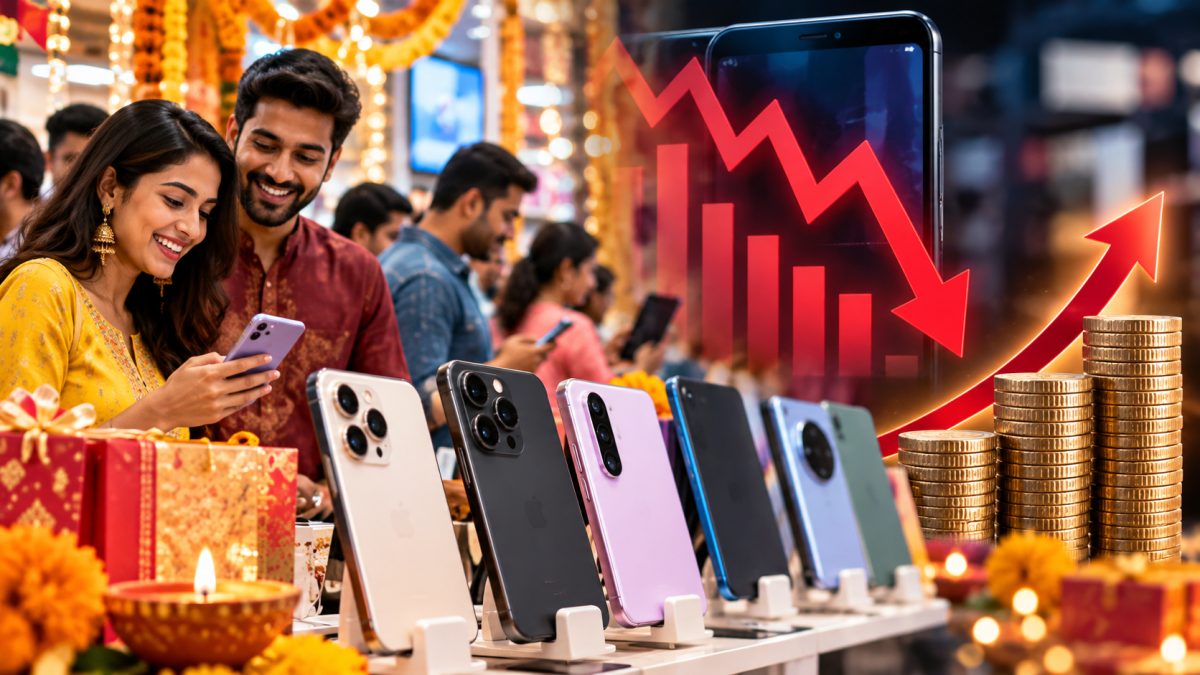

Fewer people will buy new phones this festive season, but the ones who do will spend a lot more money.
India's festive smartphone market 2026 is expected to shrink by about 12% in unit sales, even though total market value will grow roughly 5%, according to Counterpoint Research figures reported by the Times of India on October 11, 2026. The gap between falling sales and rising value comes down to one thing: smartphones are getting more expensive, and fewer people can afford to upgrade.
Amazon Drops Apple Prices to Record Lows Days Before Prime Big Deal Days Even Starts
Why the India festive smartphone market 2026 looks so different this year
View this post on Instagram
Normally, festive season in India means big discounts and millions of new phone sales. Not this year. Counterpoint's forecast shows a market where fewer phones are changing hands, but each phone sold brings in more money for sellers. That is only possible when buyers are moving toward pricier devices while cheaper options disappear or become harder to justify.
The numbers back this up across multiple research firms. IDC reported that smartphone shipments in India fell 11.1% year-on-year in the second quarter of 2026. The first half of the year brought in just 64.2 million units, down 7.9% from a year earlier and the weakest first-half total in five years. Full-year 2026 shipments could land around 128 to 130 million units, IDC said, while a separate estimate cited by Moneycontrol put the number closer to 125 to 128 million, with the festival quarter alone dropping to 32-35 million units from 48 million last year.
Memory chip prices are the real culprit behind the slowdown
Behind almost every price hike this year sits one cause: memory chips. Phones need DRAM for running apps and NAND flash for storage, and both have gotten dramatically more expensive. TrendForce expected regular DRAM contract prices to climb another 13-18% in the third quarter of 2026, building on a staggering 93-98% jump earlier in the year. Counterpoint said memory costs had roughly quadrupled over three quarters.
That cost increase doesn't stay with chipmakers. It gets passed straight to buyers. Business Standard reported that average mobile phone prices in India rose 21% during 2026, compared with just 15% globally. Budget phones took the hardest hit because memory makes up a bigger slice of their total cost. IDC expects the sub-$100 phone segment to collapse by more than 80% this year, while the $100-$200 range could fall 9-10%.
Global PC Shipments Q3 2026: Why Sales Crashed 20% in Just One Year
What industry analysts are saying about falling demand
Counterpoint's Tarun Pathak said the market remains under pressure because elevated memory prices and weak entry-level demand continue to weigh on overall volumes. He added that the full-year market is projected to decline 10% year-on-year due to sustained component cost inflation, particularly in memory, which is hurting affordability and stretching out how long people keep their phones before replacing them.
Prachir Singh, a senior analyst at Counterpoint, told the Economic Times that festive-season volumes were expected to drop 10% year-on-year, a sharp reversal after 2025 delivered India's strongest festive smartphone season since 2020. That strong comparison base is part of why this year's decline looks so steep on paper, even though the underlying issue is genuinely new cost pressure, not just a return to normal.
Brands and buyers are both stuck making tough calls
Phone makers and retailers are caught in a bind. Hold prices steady and protect profit margins, but risk scaring away budget-conscious shoppers. Or cut prices to keep volumes up, and watch margins shrink even further under memory cost pressure. Neither choice is easy, and it shows in how festive promotions are shaping up this year.
Shoppers are likely to see fewer straightforward price cuts. Instead, expect financing deals, exchange bonuses, and bank card offers doing the heavy lifting that direct discounts used to handle. Storage configurations may also shrink at the same price points, essentially a hidden price hike. Buyers priced out of new phones may turn to refurbished devices instead, a trend that could grow if affordability keeps getting squeezed.
What comes next for India's smartphone buyers and sellers
The rest of 2026 looks tough for volume growth. IDC expects second-half shipments to fall more than 15%, pulling the full-year total down to somewhere between 125 and 130 million units depending on whose estimate you trust. Premium brands are likely to hold up better since their customers are less sensitive to price swings, and that's part of why total market value keeps climbing even as unit sales fall.
Whether things turn around depends largely on memory chip supply easing up, the rupee's strength, and whether manufacturers decide to absorb more cost themselves instead of passing it on. Until one of those shifts, India's smartphone story in 2026 will likely stay the same: fewer phones sold, higher price tags, and a market leaning harder on premium buyers to keep the numbers looking good.