
India wants to know not just what states make, but what people actually spend.
Quick Summary: MoSPI released draft guidelines on October 9, 2026, letting states use the GDP expenditure method with a 2022-23 base year. It tracks household spending, government costs, investment and trade to show how state economies really work.
Four Global Agencies Raise India's Growth Forecast in One Day :Here's What Triggered the Rush
Why The States GDP Expenditure Method Is A Big Deal
For years, India measured state economies by looking at what factories, farms and offices produced. That is called the production method. Now, the Ministry of Statistics and Programme Implementation, known as MoSPI, wants states to also try something new called the states GDP expenditure method. This looks at how money gets spent, not just what gets made.
Old system: States mostly used the production approach, counting value added by farming, factories, building work and services. New proposal: States would also estimate GDP by adding up spending from households, government, businesses and trade.
Big gap filled: No state currently tracks Private Final Consumption Expenditure, meaning nobody has a clear number for how much households actually spend. Released by: The National Statistical Office under MoSPI, on October 9, 2026.
What Exactly Gets Counted
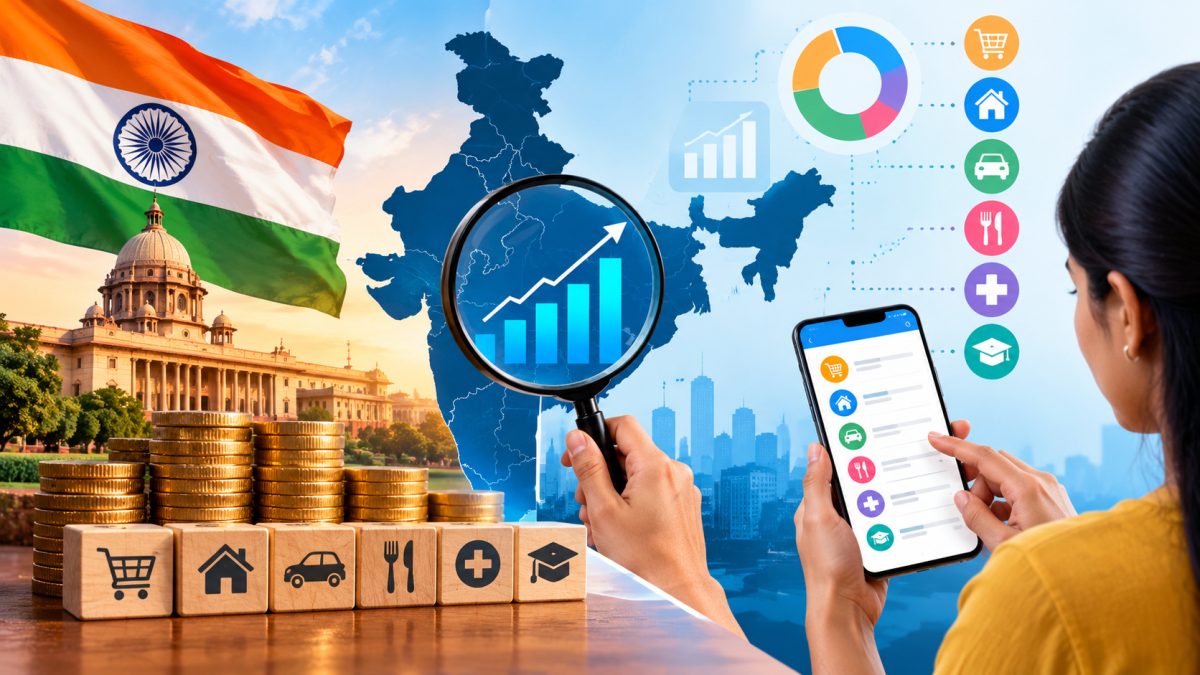
The draft breaks spending into six parts. Think of it like adding up every rupee spent across a state in one year.
Private Final Consumption Expenditure (PFCE): Money spent by households and nonprofit groups on daily needs. Government Final Consumption Expenditure (GFCE): Money the government spends running its offices and services. Gross Fixed Capital Formation (GFCF): Investment in buildings, roads, machines and equipment.
Changes in inventories: Stock of goods sitting in warehouses or shops. Acquisitions of valuables: Things like gold or jewelry people buy as investments. Net exports: Total exports minus total imports.
How MoSPI Plans To Track Household Spending
This is the tricky part. States never had a good way to measure how much families spend. MoSPI's draft lists several clever ways to estimate it using real data people already generate every day.
Household Consumption Expenditure Survey (HCES): Combined with population numbers to estimate average spending per person in each state. Electricity use: Data from the Central Electricity Authority on home power consumption. Fuel use: LPG and kerosene numbers from petroleum departments. Vehicle data: Car and bike sales from the Vahan registration system, plus an assumed 15-year vehicle life to estimate repair and fuel costs.
Banking records: Reserve Bank of India data on deposits and personal loans. Insurance data: Premium numbers from the Insurance Regulatory and Development Authority of India. Travel and communication: Air passenger traffic and telecom subscriber counts.
Government Spending And Investment Tracking
Government spending will be measured using state budgets, local body accounts and records from the Public Financial Management System. For investment, MoSPI plans to combine state-level Gross Value Added with national capital-output ratios, especially in areas where private company investment data is weak or missing.
CBO Says Iran War Has Cost US $38 Billion Since February
Timeline: How We Got Here
This change did not happen overnight. Officials have known about this measurement gap for a long time.
Earlier years: States relied mainly on production and income methods because expenditure data was too hard to collect. August 2026: Official documents still described the missing expenditure-side data as an unsolved problem. October 9, 2026: NSO and MoSPI released the draft guidelines for the expenditure method.
Base year chosen: 2022-23, matching India's revised national base-year framework. Next step: States and Union Territories will now study the guidelines and start building their own estimates using common rules.
MoSPI said the draft guideline offers a "uniform and comprehensive framework for compilation of GSDP estimates from the expenditure side across States and Union Territories," aiming for "consistency, comparability and methodological standardization" under the new base year.
What This Means For States And Everyday People
This is not about replacing the old system right away. It is about adding a new lens to see the full picture.
Better comparisons: States will use the same definitions, so comparing one state to another becomes fairer. Clearer growth drivers: Policymakers can see if growth comes from people spending money, government spending, business investment, or trade.
Challenges ahead: Tracking private investment, inter-state trade and central government spending across state lines remains hard. No fixed date yet: There is no confirmed date for when states will publish full expenditure-based GDP numbers.
Economic watchers say this could change how we judge which states are truly growing. A state might produce a lot of goods but show weaker household spending, while another might attract heavy investment without matching production numbers. Until years of data pile up, comparing old and new numbers will need some caution.