
The Omani first officer accused of attacking his captain mid-flight had reportedly been flagged for extremist views and barred from flying before joining Flydubai.
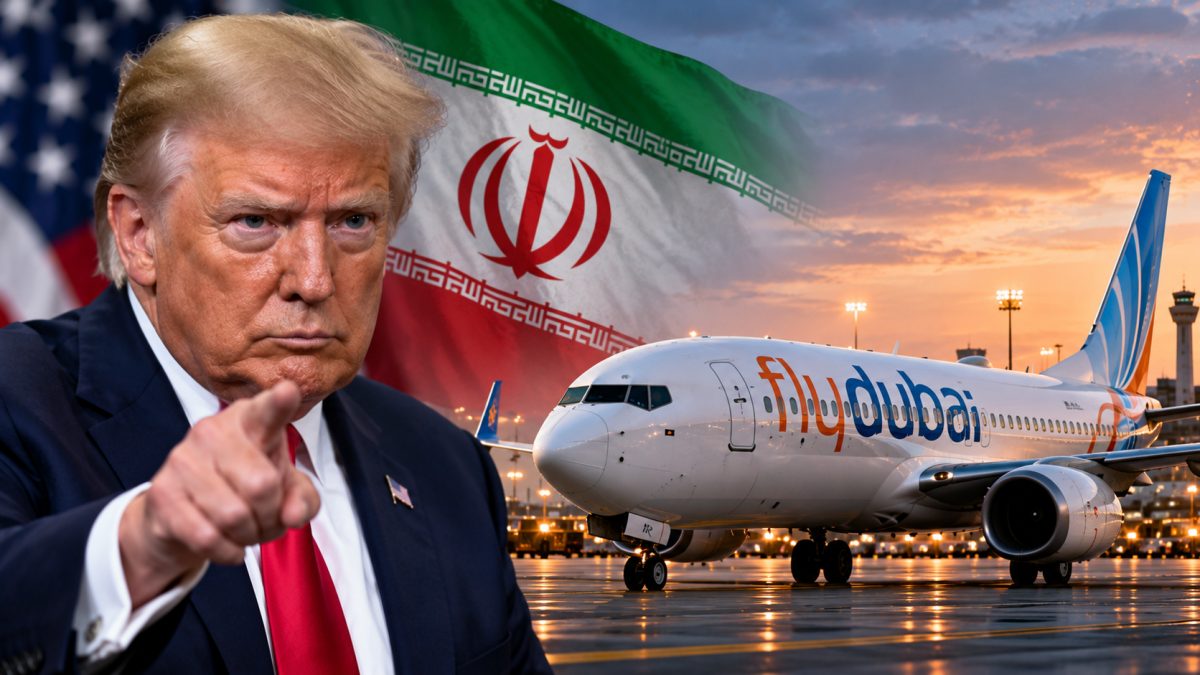
President Donald Trump warned Thursday, Oct. 1, 2026, from the White House that Iran would be struck "very hard" if investigators confirm Tehran's involvement in an alleged cockpit attack aboard a Flydubai flight traveling from Dubai to Tel Aviv a day earlier. The aircraft, carrying more than 180 passengers and crew, was forced into an emergency landing in Saudi Arabia after the Omani first officer allegedly attacked the captain with a knife, according to the Associated Press. Trump said the available information suggested a possible Iranian link but acknowledged no public evidence had yet established that Tehran directed, financed or otherwise supported the incident.
60 Million Kids Just Got Trump Accounts Automatically, Here’s Why Parents Still Must Act
How the Cockpit Attack Unfolded Over the Arabian Peninsula
View this post on Instagram
According to accounts cited by the Associated Press, the first officer attacked the captain inside the cockpit, causing the aircraft to descend sharply and triggering an emergency response among the crew. The captain reportedly managed to unlock or open the cockpit door, after which passengers rushed in, overpowered the alleged attacker and restrained him until the plane could land safely. Off-duty pilots and other qualified personnel onboard assisted in regaining control, enabling the flight to divert to Saudi Arabia rather than continue to Israel.
Saudi authorities detained the suspect and began coordinating with Israel, the United Arab Emirates and other governments to reconstruct the timeline and determine motive. Saudi Arabia later confirmed the suspect was transferred to the UAE accompanied by an "Emirati security team," with its preliminary account describing an attack on the captain. As of Oct. 2, the suspect's name had not been publicly released and formal charges remained unclear. Passenger counts varied across reports — 174 in some accounts, more than 180 in others when crew were included — but this discrepancy reflects differing tallies rather than separate incidents, and no reporting indicated the aircraft crashed or that passengers were killed.
Trump Threatens to 'Annihilate' Iran at UN, Then Reveals Secret Three-Hour Talks Hours Later
Trump's Warning and the Gap Between Suspicion and Proof
Asked directly whether Iran was involved, Trump told reporters: "I would say the answer, based on what I'm hearing, is yes, but we're working on it right now." Pressed on whether the United States would retaliate against Tehran, he added: "Oh, they'll be hit, very hard, don't worry." The remarks amounted to a conditional threat rather than an announced military operation — no specific target, timing or operational decision was disclosed publicly.
Trump's framing went notably further than that of Israeli Prime Minister Benjamin Netanyahu, who told Fox News it was "too early to say" whether Iran was involved. The divergence is significant: Trump cited intelligence or briefings he said he had received without presenting supporting evidence, while Netanyahu publicly stressed that the investigation remained incomplete. Neither leader named a specific Iranian official, military unit, proxy group or communications channel allegedly tied to the attack, leaving attribution squarely unresolved.
A Troubling Employment History Comes Into Focus
Scrutiny has intensified around the suspect's background because he was reportedly not an ordinary passenger but a trained member of the flight crew. CNN reported that the pilot had previously been removed from a position at Oman's national airline, Oman Air, after concerns arose about his extremist views, with sources saying he was taken out of training and shifted into another role rather than continuing to fly. Separate reporting attributed to The Wall Street Journal said Omani authorities had banned him from flying altogether over concerns about radical ideological views.
Accounts differ on the precise chronology. Some reports indicate Omani authorities identified him as a security risk in 2024 and suspended him from flying for roughly a year after extremist material was found in his possession. Other reporting describes him as a trainee removed from flight duties who later continued in an administrative capacity at Oman Air. Oman Air, Flydubai and Omani authorities had not publicly confirmed the full details of this history in the reporting available as of Oct. 2, and it remains unclear whether Oman formally shared its earlier ban with other carriers or countries.
Unanswered Questions on Motive and Vetting Failures
The suspected motive remains unverified. Some reports describe the man as influenced by extremist or Islamist ideology, while others say investigators are still determining whether the attack was ideological, personal, politically motivated or linked to a broader organization. Claims that he intended to crash the aircraft in Israel have circulated in media citing investigative sources but should be treated as allegations pending formal evidence or judicial proceedings, since no public confession or court finding has established intent.
The employment history raises pointed questions about information-sharing between airlines, aviation regulators and security agencies across Oman and the UAE. Investigators are expected to examine whether earlier concerns were formally communicated to Flydubai, whether the suspect passed required background checks, and whether crew-vetting standards differed between the two countries' aviation authorities. Available reporting does not establish that Flydubai knew of the prior concerns or violated any aviation law in hiring him.
Why Attribution to Iran Carries High Stakes
The unresolved question of Iranian involvement is the most consequential element of the investigation. No public accounts have presented proof that Tehran ordered or assisted the attack, and Iran's government response, if any, was not included in the reporting reviewed. Attribution would require evidence linking the operation to Iranian officials, security services, military units or affiliated organizations — a far higher bar than merely establishing that the suspect held views hostile to Israel.
The episode unfolds against a backdrop of heightened U.S.-Iran tensions and ongoing regional conflict, making any attribution especially fraught. A confirmed Iranian connection could generate pressure for an American military response and risk escalation with Tehran, while an unsubstantiated claim could inflame diplomatic tensions before investigators establish the facts. Authorities are expected to review the emergency landing, the cockpit-access sequence, the suspect's employment records and the handling of prior warnings, though no public timetable for a final report, criminal hearing or regulatory changes had been announced as of Oct. 2.