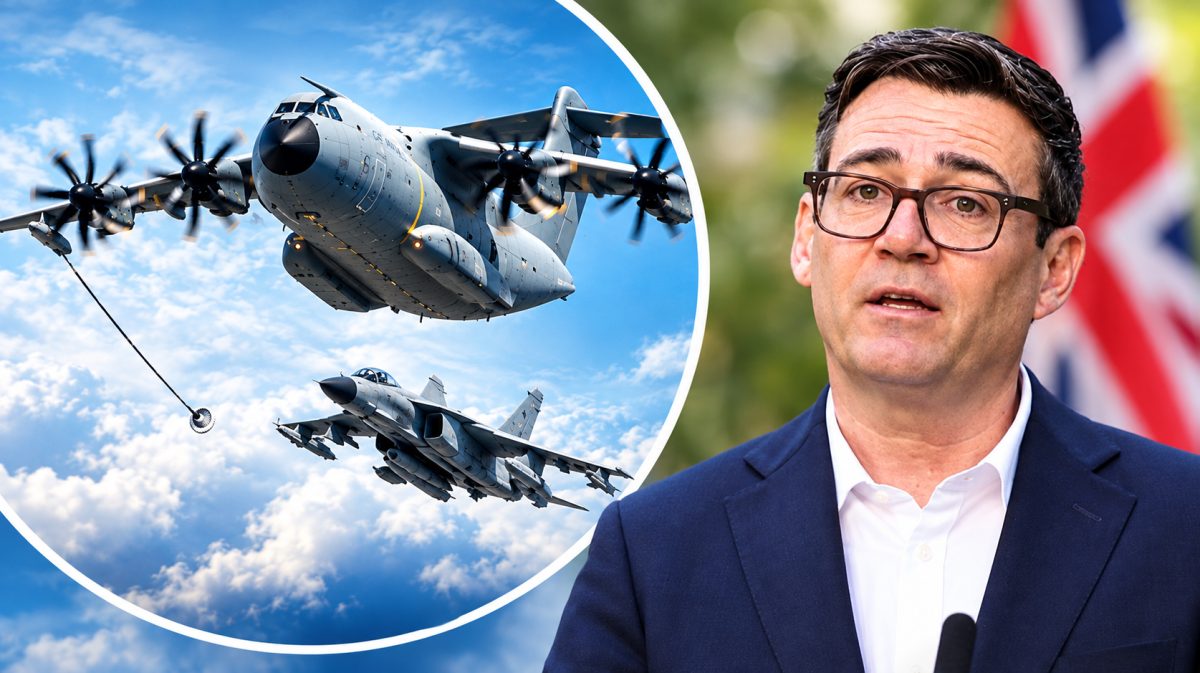

A single RAF Voyager tanker will refuel Saudi jets defending against Houthi drones and missiles, in a mission Burnham insists is strictly defensive and time-limited.
UK Prime Minister Andy Burnham announced on Monday, 21 September 2026, that Britain has agreed to a Saudi Arabian request for military assistance to counter escalating attacks by Yemen's Iran-backed Houthi movement, confirming to reporters aboard his plane en route to the United Nations General Assembly in New York that the UK will provide air-to-air refueling for Saudi jets conducting defensive operations.
Trump Signs Russia Sanctions Law, Gains Power for 100% Tariffs on India, China
How the Decision Unfolded Over One Week
The announcement capped roughly a week of deliberation inside Downing Street. Bloomberg first reported on 14 September 2026 that Burnham was weighing Saudi requests for a range of diplomatic and military support amid British fears of a worsening economic hit from the escalating conflict, with British military advisers dispatched to consult Saudi forces even before a final decision was made. The Telegraph and BBC confirmed similar reporting on 15 September, noting that Riyadh had asked London for help repelling Houthi advances along Yemen's Red Sea coast and defending against strikes on Saudi oil infrastructure.
The turning point came on 19 September, when Saudi authorities publicly confirmed that Houthi rebels had attempted a ballistic missile strike against Riyadh itself. That confirmed attack accelerated British deliberations, and by the night of Sunday 20 September, Burnham had signed off on the request. He told reporters: "We have received a request from the Kingdom of Saudi Arabia for military support, and on the advice of the defence secretary and the foreign secretary, last night I agreed to that request for defensive air-to-air refuelling, and that's the agreement that we've given."
Saudi Arabia Says Iraq-Launched Drones Struck East-West Oil Pipeline
Inside the Operation: One Tanker, Weeks, Strict Limits
The deployment itself is narrow in scale. A single RAF Voyager aircraft, operating out of RAF Akrotiri in Cyprus, will refuel Saudi jets engaged in missions to intercept incoming Houthi drones and missiles, according to BBC and Metro reporting. Officials briefing media stressed repeatedly that the mission will not involve UK aircraft in any strikes against Houthi positions inside Yemen, distinguishing this operation from earlier UK participation in joint US-UK strike campaigns against Houthi targets between 2024 and 2025.
Burnham described the arrangement as deliberately constrained: "That is a time-limited agreement in terms of the assistance that we will provide, but we will keep it under review." The mission is expected to begin within days of the announcement and to run for a matter of weeks rather than months, with Downing Street retaining the option to extend, scale back or terminate the deployment as circumstances evolve. Officials have not specified a fixed end date, leaving the operation's duration contingent on the trajectory of Houthi attacks and Saudi requests.
Why Burnham Frames This as Defensive, Not Escalatory
Burnham has gone out of his way to draw a bright line between this deployment and offensive military engagement. "It's defensive support. We have support in the region to maintain the Strait of Hormuz open. We are playing our part," he said, tying the decision to broader efforts to keep critical shipping lanes functioning. He further framed the move as protecting British interests directly, stating he was acting "to secure the interests of Britain and the wider region, because of course Saudi Arabia has been experiencing attack, is looking at potential further disruption and we need to keep those pathways open."
That framing matters politically. The deployment is Burnham's first major overseas military commitment since becoming prime minister, and iNews and other domestic outlets note it will likely draw parliamentary and public scrutiny given historic UK sensitivity around backing Saudi-led military campaigns in Yemen. By emphasizing the mission's narrow, defensive and reviewable nature, Burnham appears to be pre-empting criticism that Britain is being drawn into a wider regional conflict rather than simply helping an ally intercept incoming threats.
The Regional Stakes Behind the Request
The UK's involvement sits within a longer arc of Houthi disruption to Red Sea and Gulf shipping. Since January 2024, US and UK forces have conducted joint strikes against Houthi positions in response to attacks on international shipping in the Red Sea and Gulf of Aden, according to the UK Parliament's Commons Library, with the UK's most recent participation recorded in strikes through spring 2025. The current crisis, however, centers on direct threats to Saudi territory and oil infrastructure rather than shipping lanes alone, following the confirmed attempted missile strike on Riyadh.
Wall Street Journal commentary situates the UK's move within a wider regional realignment, arguing that Houthi efforts to disrupt Saudi oil exports have already pushed Saudi Arabia, the UAE and Israel into closer coordination under US Central Command facilitation. While this analysis extends beyond confirmed UK policy statements, it underscores the stakes Burnham cited in linking the refueling mission to safeguarding energy supplies, trade routes through the Strait of Hormuz, and broader British economic interests as the Houthi threat intensifies.
What Comes Next for Britain's Involvement
The RAF Voyager deployment is expected to launch within days of the 21 September announcement, with UK officials committing to keep the arrangement under continuous review rather than treating it as an open-ended commitment. Should Houthi attacks on Saudi territory or oil infrastructure escalate further, pressure could mount on Burnham either to expand support or to justify maintaining strict limits on UK involvement, particularly given his repeated assurances that British aircraft will not participate in offensive operations inside Yemen.