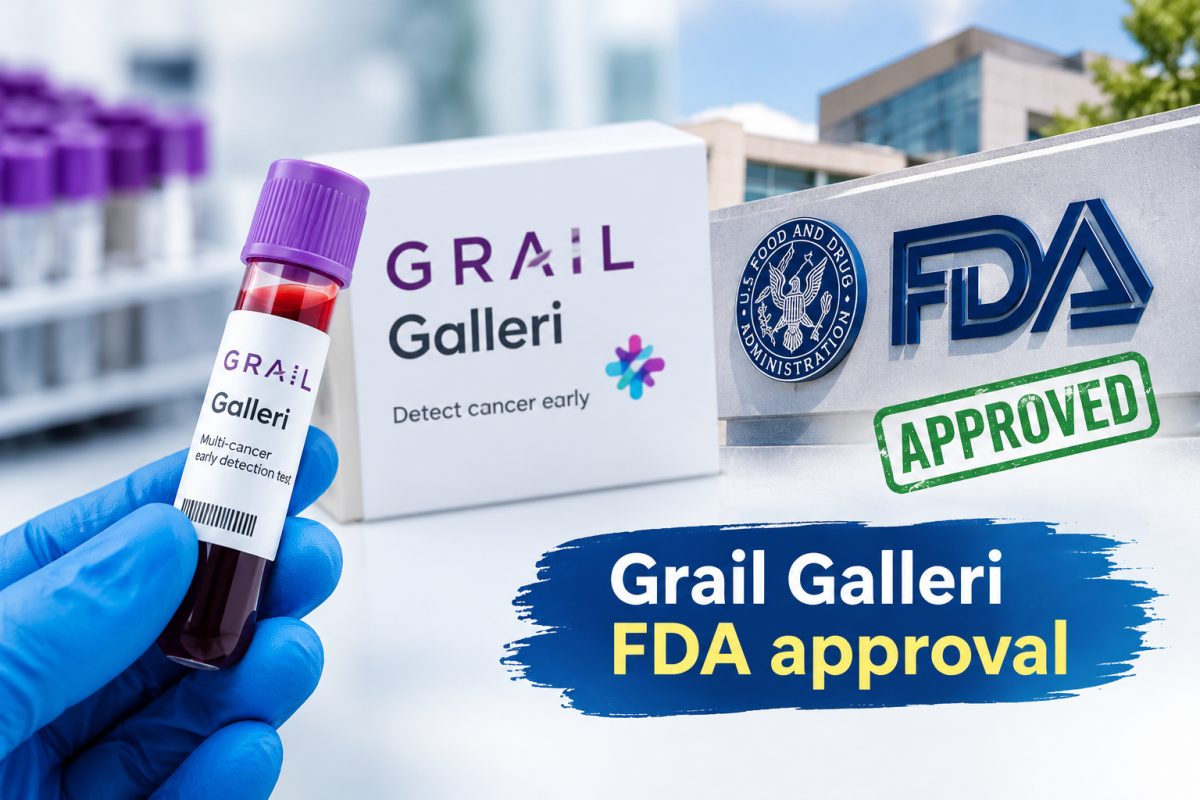

A closely watched FDA advisory panel backed the benefits of Grail's Galleri blood test over its risks, but a split vote on effectiveness signals the fight over multi-cancer screening is far from settled.
WASHINGTON — The Food and Drug Administration's Molecular and Clinical Genetics Panel voted on Wednesday, September 23, 2026, to endorse GRAIL Inc.'s Galleri multi-cancer early-detection blood test, concluding that its potential benefits outweigh its risks. The panel voted unanimously, 10-0, that the test is safe, 6-4 that there is reasonable assurance it is effective, and 7-2, with one abstention, that its benefits outweigh its risks, according to the Associated Press and STAT News. The vote is advisory only; the FDA must still issue a final decision on GRAIL's premarket approval application.
Novartis Pelacarsen Fails Pivotal Lp(a)HORIZON Cardiovascular Trial, Company Announces
A Daylong Hearing Built Around One Question
The vote followed a daylong advisory-committee meeting in Washington that began at 9 a.m. Eastern time and was scheduled to run until 6 p.m., convened specifically to examine GRAIL's premarket approval application, the regulatory pathway reserved for high-risk medical devices that require FDA clearance before they can be marketed. Galleri is intended for prescription use in adults aged 50 and older who show no symptoms of cancer, analyzing cell-free DNA in a blood draw through next-generation sequencing to identify cancer-associated methylation patterns.
When the test detects a cancer signal, it predicts the tissue or organ where that signal most likely originated, prompting physicians to order imaging, laboratory testing, or a biopsy to confirm or rule out disease. GRAIL has said Galleri is designed to detect signals associated with more than 50 cancer types, many of which currently lack any routine population-level screening method. No other multi-cancer blood test currently holds FDA approval for general use in the United States, making Wednesday's vote a potential first for the category.
CVB Financial Director Mike Maddox Buys 10,000 Shares in August
Strong Safety Data, Softer Consensus on Effectiveness
The unanimous safety vote reflected FDA staff briefing documents released ahead of the meeting that reportedly identified no major outstanding questions about Galleri's analytical performance, study design, or primary safety analyses, according to Medical Daily and Reuters. That favorable staff assessment helped send GRAIL shares up roughly 35% on Monday, September 21, two days before the panel convened, as investors anticipated a smoother path toward federal authorization.
Yet the 6-4 efficacy vote tells a different story. The panel's split reveals that evidence supporting Galleri's real-world clinical benefit was considered substantially less conclusive than the safety data. The Associated Press reported that panelists endorsed the test while explicitly warning that it remains unclear how well it performs in real-world cancer screening. That distinction — between a test that safely detects molecular signals and a test proven to improve health outcomes when deployed broadly — sits at the center of the scientific debate now facing the FDA.
The Evidence Base: Two Large Studies, One Unanswered Question
GRAIL's application leans on two major studies. PATHFINDER 2, a U.S.-based prospective study, enrolled 25,490 consented participants with one year of follow-up and was designed to evaluate the test's ability to identify a cancer signal, predict its likely site of origin, and guide diagnostic resolution in clinical practice. The application also incorporates data from more than 70,000 participants in the intervention arm of the first-year prevalent screening round of the NHS-Galleri randomized controlled trial in the United Kingdom.
FDA briefing materials reportedly stated that Galleri met prespecified criteria for specificity, episode sensitivity, and cancer-site-of-origin prediction accuracy while increasing overall cancer detection. Still, none of that data directly answers whether screening healthy adults with Galleri reduces cancer mortality — the outcome that ultimately determines whether a screening test delivers genuine public-health value rather than simply identifying more disease.
Weighing False Positives Against Earlier Detection
Panel discussion centered heavily on the twin risks of false positives and false negatives. A false-positive result can trigger imaging, endoscopic procedures, biopsies, financial cost, psychological distress, and potential procedural complications in people who do not have cancer. A false negative, by contrast, risks providing false reassurance, potentially delaying care if a patient or clinician later dismisses genuine symptoms because of a clear prior test result.
Supporters told the panel that catching cancers earlier, particularly types with no existing screening protocol, could expand treatment options and identify deadly disease before symptoms emerge. Critics countered that earlier detection does not automatically translate into fewer deaths and cautioned that widespread screening could subject healthy populations to invasive follow-up procedures without proof of net benefit. GRAIL has positioned Galleri as a complement to, not a replacement for, existing screening protocols for breast, colorectal, cervical, lung, and prostate cancers, all of which remain unchanged by the committee's vote.
What Comes Next for GRAIL and Patients
The FDA is not bound by advisory committee recommendations, though it generally weighs them heavily in final decisions. The agency's next step is to issue a ruling on GRAIL's premarket approval application, with a decision expected in the coming months, according to reporting on the panel meeting. The FDA could approve the application outright, request additional information, approve it with conditions, or decline approval altogether.
A congressional policy change is expected to permit Medicare reimbursement for qualifying multi-cancer detection tests beginning in 2028, following full FDA review, according to reporting ahead of the meeting. If ultimately approved, Galleri would become the first FDA-approved multi-cancer early-detection blood test in the United States, a milestone that could reshape physician adoption, insurance coverage, and pricing. But approval alone would not resolve the underlying question panelists grappled with Wednesday: whether finding cancer earlier through a single blood draw actually saves lives, a question that depends on continuing prospective and randomized evidence still being gathered.