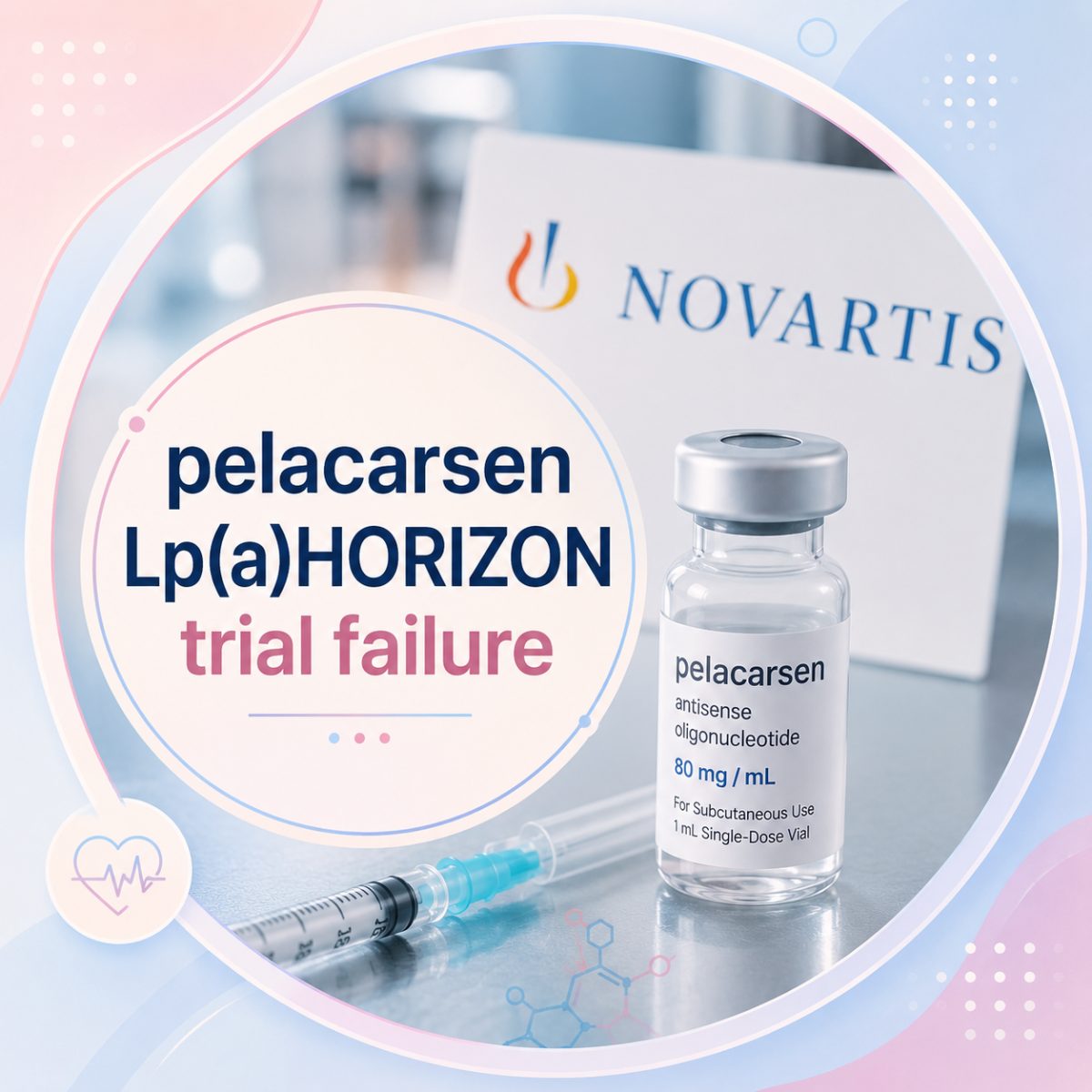

Novartis says its Lp(a)-lowering drug failed a closely watched cardiovascular outcomes trial, dealing a blow to a long-anticipated approach to heart disease prevention.
Novartis announced Friday, September 4, 2026, that pelacarsen, an experimental RNA-based drug developed with Ionis Pharmaceuticals, failed to meet its primary endpoint in the pivotal Phase 3 Lp(a)HORIZON trial, according to top-line results reported by STAT and the company. The drug did not significantly reduce major adverse cardiovascular events—including cardiovascular death, non-fatal heart attack, non-fatal stroke, or urgent coronary revascularization—compared with placebo, despite drastically lowering lipoprotein(a) levels in earlier studies.
Trial Design and Timeline
Lp(a)HORIZON (NCT04023552) enrolled 8,323 patients with established cardiovascular disease and Lp(a) levels of 70 mg/dL or higher, according to Wikipedia's summary of the trial and an August 30, 2026, pharmaceutical pipeline report. Participants received 80 mg of pelacarsen subcutaneously each month or placebo, on top of standard care. The trial began in December 2019 and completed enrollment in 2022, but the event-driven readout was delayed multiple times—first from 2025 to the first half of 2026, then to the second half of 2026—because patients experienced cardiovascular events more slowly than projected, Novartis disclosed in investor communications cited by MSN and CNBC.
A Second Cardiology Setback This Summer
The pelacarsen failure follows a similar disappointment weeks earlier involving Novo Nordisk's ziltivekimab, an anti-inflammatory heart drug that also failed its pivotal trial despite lowering inflammatory markers, The New York Times reported August 6, 2026. That article, headlined "A Promising Heart Drug Fails, Challenging a Long-Held Theory of Disease," described how ziltivekimab's failure "stunned the cardiology world" and prompted experts to question whether inflammation causes heart disease. Analysts at UBS had projected pelacarsen could reach statistical significance around a 12% relative risk reduction, Reuters reported July 20, 2026, while a forecasting group at 76th Street Research had placed the probability of trial success at roughly 47%.
Novartis said it is continuing to analyze subgroup data, secondary endpoints, and biomarker changes from the trial, according to STAT's report. No Lp(a)-lowering drug, including competing programs from Amgen and Eli Lilly, had yet demonstrated a positive cardiovascular outcomes result as of the announcement, CNBC reported in April 2026.