
The suspension cuts off a trade relationship worth tens of billions of dollars annually and closes one of Tehran's last major economic lifelines.
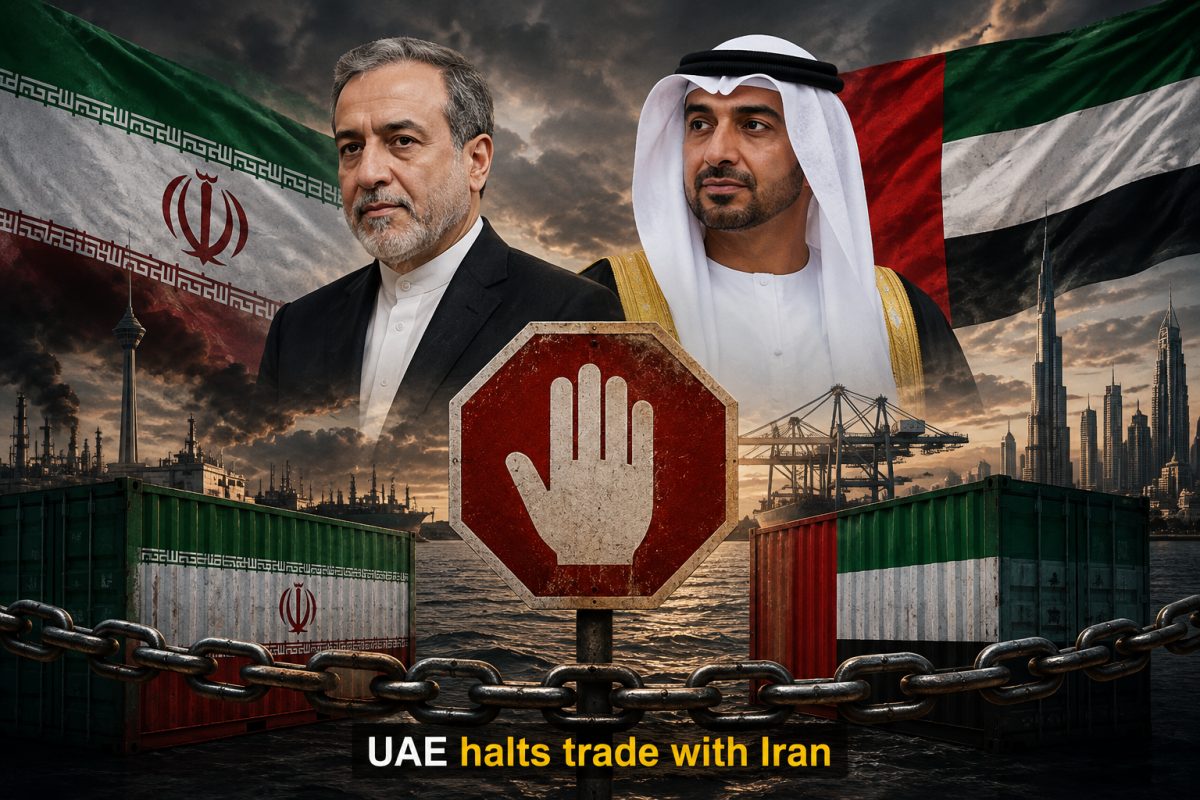
The United Arab Emirates has suspended all trade, commercial exchanges and financial transactions with Iran "until further notice," the government announced this week, after accusing Tehran of firing two ballistic missiles toward UAE territory and its waters. The missiles were reported on a Tuesday night in the Persian Gulf, with one landing outside UAE territorial waters and the other falling within them; both splashed down in the sea without causing damage or casualties. The following day, the UAE Foreign Ministry confirmed the trade and financial halt, citing "regional escalations that undermine regional and international peace and security."
UAE Ministry of Foreign Communications Director Afra al-Hameli announced the suspension, which effectively amounts to a de facto embargo on one of Iran's most important economic partners. The missile incident triggered nationwide warning alarms in the UAE, with residents reportedly seeking shelter for the first time in weeks amid the broader Iran conflict. Emirati officials characterized the missiles as targeting maritime navigation, raising fresh concerns about shipping safety and regional security in the Gulf.
A Missile Incident That Escalated Into Economic Rupture
The chain of events began with the reported missile launches from Iran toward the UAE and nearby waters, an act Emirati officials linked directly to their decision to sever trade ties. Despite the missiles causing no reported damage, the psychological and political impact was immediate, prompting the government in Abu Dhabi to take one of its most severe actions against Tehran in years.
The UAE has stressed that it remains committed to "dialogue, cooperation, and regional integration," suggesting the embargo is framed as a security response rather than a permanent diplomatic break. Still, the scale of the halt marks a dramatic shift for a country that has long served as Iran's most significant regional trading partner and re-export hub.
Tens of Billions of Dollars in Commerce Now in Jeopardy
Before the embargo, the UAE supplied more than 30% of Iran's imports, a trade flow valued at roughly $21 billion annually, while accounting for nearly 13% of Iran's exports, according to research cited by the New York Post. Foreign Policy, citing World Trade Organization data, put total bilateral trade in 2024 at around $28 billion, underscoring just how central the UAE has been to Iran's economy.
The New York Post reported that the suspension threatens to interrupt roughly $6 billion in export revenue Iran had expected to receive, along with the country's access to essential imported supplies. Beyond goods, the UAE has also functioned as Iran's primary channel for acquiring U.S. dollars, according to a former U.S. official cited by the Post. Cutting off that access strikes at Iran's ability to conduct international transactions at a time when it is already isolated from much of the global financial system.
Why Analysts Call the Move Potentially Crippling
Mohammad Farzanegan, a professor of Middle Eastern economics at the University of Marburg, described the UAE as "very important for Iran as a re-export hub" that has helped the country absorb shocks from years of sanctions. With that channel now closed, analysts say Iran loses not only a major trading partner but also a critical workaround for sanctions enforcement.
The New York Post cited a retired U.S. general and former State Department official who warned that a halt to trade and dollar transactions could "severely impact the Iranian economy," calling it potentially one of the biggest threats the regime has faced. The Wall Street Journal, as summarized by The Week, suggested that the success of Washington's broader strategy to squeeze Iran's economy "will live or die in Dubai," reflecting how central the emirate's free-trade zones have been to Iranian commerce.
Timing Raises Questions About U.S. Involvement
The New York Times reported that the UAE's announcement came hours after a phone call between President Donald Trump and UAE President Sheikh Mohammed bin Zayed, a detail that has fueled speculation about Washington's role in shaping the decision. Multiple outlets note the embargo aligns closely with the Trump administration's broader push to isolate Iran economically, though there is no official confirmation that the U.S. directly ordered or negotiated the move.
Coverage from the New York Times, Washington Post, CNBC and Foreign Policy frames the UAE's decision as a significant test of that isolation strategy. Analysts caution, however, that enforcement may prove difficult given Dubai's long history as an informal trading hub, and that some commerce could continue through third-country intermediaries or clandestine routes even as official channels close.