
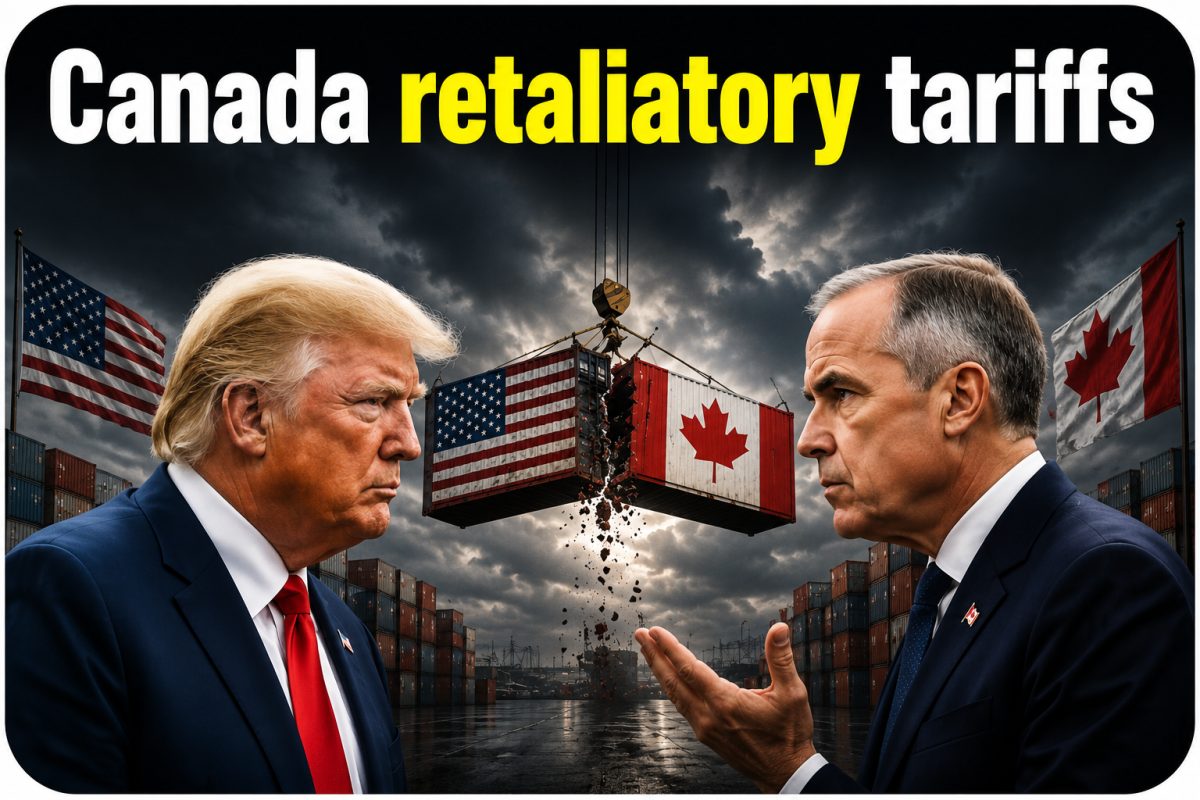

Ottawa is finalizing a dollar-for-dollar tariff package targeting US steel, dairy, appliances and electronics after trade talks collapsed and Washington imposed 50% duties on Canadian goods.
Canada is preparing to formally announce a package of retaliatory tariffs against the United States, timed for early September, after President Donald Trump warned Ottawa of "worse consequences" if it proceeded with countermeasures. The move follows a sharp escalation in the US-Canada trade dispute, including new 50% US tariffs on roughly $20 billion in Canadian goods and threats to expand tariffs into sectors such as automobiles. Prime Minister Mark Carney has confirmed that Canada's retaliatory tariffs will take effect on September 8, matching Washington's measures "dollar for dollar."
The dispute reached a breaking point on August 21, when high-level trade talks between US and Canadian negotiators in Washington broke down without agreement. Each side blamed the other for the collapse. Shortly afterward, the United States imposed 50% tariffs on approximately $20 billion worth of Canadian exports, a move that targets about 5% of Canada's total exports to the US, including electronics, industrial machinery and dairy products. Notably, the new tariffs do not qualify for preferential treatment under the US-Mexico-Canada free trade agreement, adding further legal and economic uncertainty to the standoff.
Carney Confirms Timing and Scope of Canadian Response
Speaking in Ottawa the day after the talks failed, Carney announced that Canada would retaliate with tariffs matching Washington's new measures "dollar for dollar." He said the new duties would take effect on September 8, the Tuesday following the US Labor Day holiday, and that Canada would release the full details of the tariff list in the days leading up to that date. "In the coming days, we will release the details of these new tariff measures, which will come into force the Tuesday after Labor Day," Carney said.
According to multiple reports, Canada's retaliatory list will target US exports of steel, dairy products, household appliances, agricultural machinery, pulp and paper, and electronics. The sectoral targeting mirrors the categories the US itself imposed tariffs on, underscoring the tit-for-tat structure of the countermeasures. Carney had signaled the likelihood of this response weeks earlier, telling a meeting of provincial premiers in July that Canada would "do whatever it takes" to defend itself in a trade war with the United States and that "everything's on the table" if no agreement could be reached.
Trump Warns of Further Escalation on Autos and Beyond
President Trump has responded to Canada's retaliation plans by warning of "worse consequences" if Ottawa proceeds, with reports indicating the threats include hiking tariffs further on Canada's automotive sector. His remarks, which coincided with Carney's dollar-for-dollar announcement, have been interpreted as an attempt to pressure Canada into abandoning or softening its planned countermeasures ahead of the September 8 deadline. The exchange has intensified what is now widely described as a full-blown trade war between the two historically close trading partners.
Analysts caution that it remains uncertain whether Trump's threats represent genuine policy intentions or a negotiating tactic aimed at extracting concessions before Canada's tariffs take effect. No further formal escalation from the US side had been confirmed as of the latest reporting, but the rhetoric has added volatility to an already tense standoff just weeks before the retaliatory measures are due to begin.
Economic Stakes for Businesses on Both Sides of the Border
Trade experts note that the 50% US tariffs could effectively price hundreds of Canadian goods out of the American market, while analysts also warn that US consumers may face higher prices and reduced choice as a result, potentially triggering domestic backlash within the United States. Businesses in both countries, particularly in steel, agriculture, manufacturing and consumer goods, have expressed concern over the cumulative impact of the tariffs and counter-tariffs, warning of cost increases and supply chain disruption.
Economists have flagged the risk that tit-for-tat tariffs can escalate quickly, making a negotiated settlement harder to reach and inflicting lasting damage on the broader US-Canada trade relationship. The dispute is unfolding within the framework of the US-Mexico-Canada free trade agreement, though the new US tariffs fall outside its preferential terms, a detail that has heightened uncertainty for exporters navigating the standoff.
Ottawa Signals Openness to Talks Despite Retaliation Plans
Despite the exchange of threats, Carney has stressed that Canada remains committed to negotiations with the Trump administration, even as retaliatory measures move forward on schedule. Canadian officials have said the retaliatory tariffs are being designed within the framework of Canadian trade law, and the government is coordinating with provinces and affected industries to manage the domestic fallout, though additional non-tariff measures have not yet been detailed.
With the September 8 deadline approaching, both governments face pressure to either reach a last-minute agreement or allow the tariffs to take effect as planned. The coming days are expected to bring the formal release of Canada's complete tariff list, along with further signals from Washington on whether Trump intends to follow through on his warnings of additional consequences.