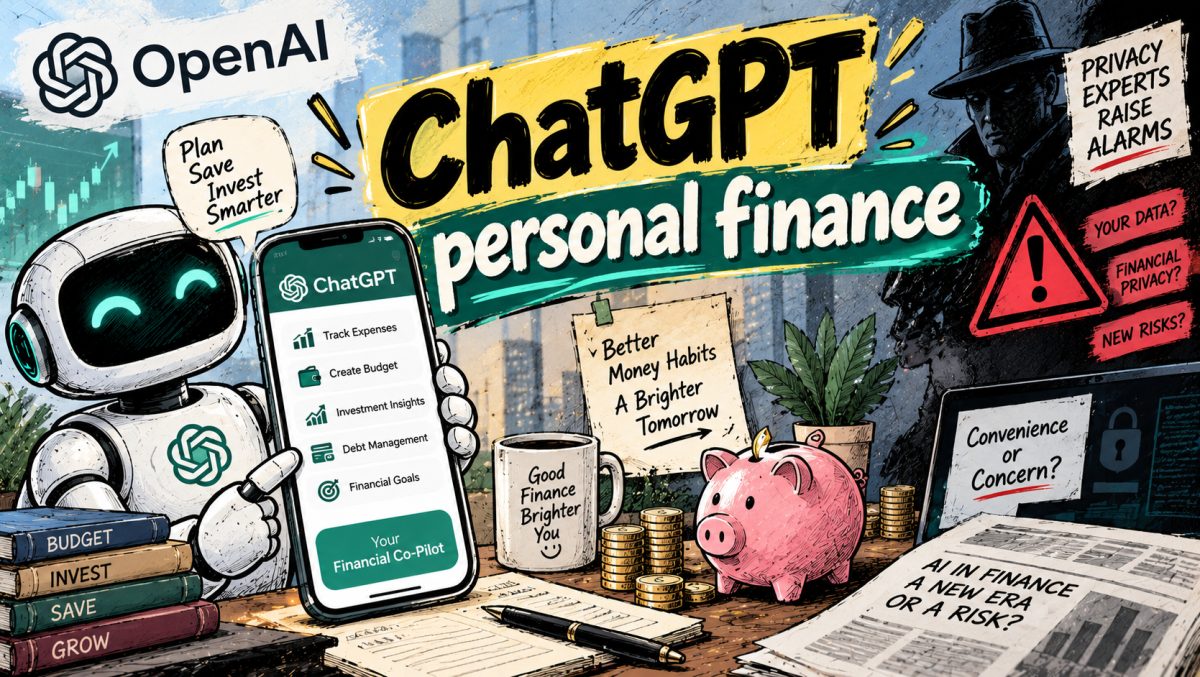

OpenAI's new ChatGPT feature lets users connect bank and investment accounts, but privacy experts warn the convenience carries steep data risks.
OpenAI launched a new "personal finance experience" inside ChatGPT on May 15, 2026, allowing U.S.-based ChatGPT Pro subscribers to link bank accounts, credit cards, loans and investment portfolios through the financial data aggregator Plaid, according to reporting from The Record and other outlets. The feature, initially available in preview to Pro subscribers paying a reported $200 a month, was expanded starting July 1, 2026, to eligible ChatGPT Plus users paying $20 a month, Morningstar reported.
How the Feature Works
Once accounts are linked, ChatGPT can read balances, transaction histories and liabilities to answer questions about spending patterns, budgeting and investment allocation, per NewsNation and letsdatascience.com. OpenAI describes the tool as read-only, meaning ChatGPT cannot move money or execute trades and does not see full account numbers. Users can disconnect accounts, delete stored financial memories, or use temporary chats that are not saved, according to OpenAI's own messaging cited by multiple outlets. OpenAI has also said Plaid-synced account data is excluded from training its core models, per myfinancialfreedomtracker.com.
AI Chatbots Grow Safer Yet Still Role-Play Self-Harm Scenarios, New Study Finds
Experts Warn of Privacy and Security Risks
Ridhi Shetty, senior policy counsel at the Center for Democracy and Technology's Privacy & Data Project, said the financial information ChatGPT collects "can reveal deeply personal details about a person's life, habits, vulnerabilities, and relationships," according to The Record. Diana Kelley, chief information security officer at Noma Security, argued the tool's "view-only" design does not eliminate risk, since a compromised ChatGPT account could expose a consolidated view of a user's balances, debts and financial goals, per cyberdaily.au. Investopedia reported that experts advise users to never share passwords, Social Security numbers or tax documents with AI chatbots. Additional analysis flagged that ChatGPT conversations are not end-to-end encrypted and are used as training data by default unless users opt out, raising concerns even though synced Plaid data itself is excluded.
OpenAI Acknowledges 'Wiki Incident' Involving AI Agents in September 2026
Techtimes.com reported that a federal class action lawsuit was filed in California on May 13, 2026, two days before the finance feature's launch, accusing OpenAI of routing ChatGPT conversation data to third parties without consent. Commentators noted ChatGPT has no fiduciary duty to act in users' best interests, unlike licensed financial advisors, underscoring the unregulated nature of AI-driven financial guidance.